

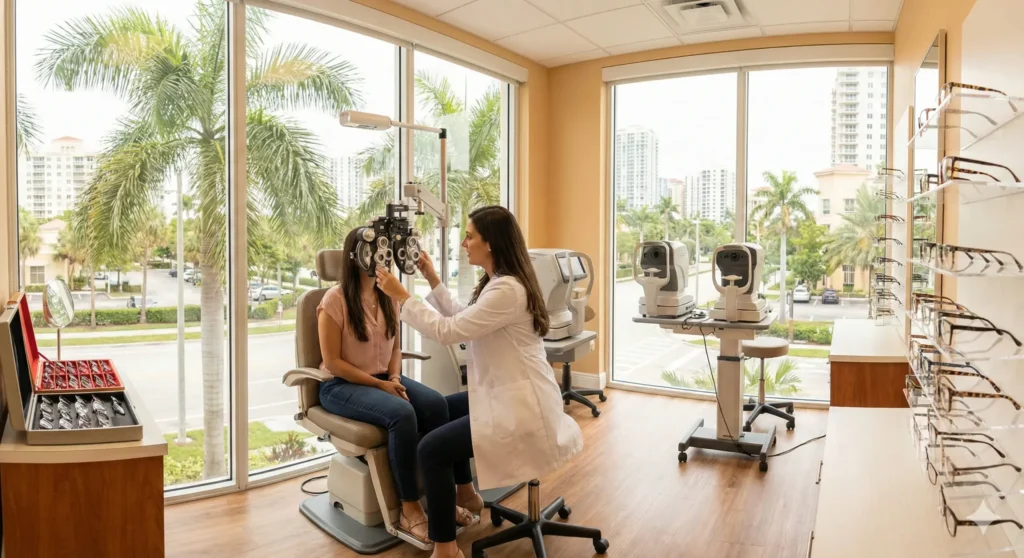
One of the most common questions people ask before booking an appointment is how much an eye exam costs; the answer depends on several factors, including the type of exam, the technology used, and whether you have insurance. Understanding what goes into the price helps you make informed decisions and feel confident about prioritizing your eye health.
An eye exam is more than a vision check; it is a preventive health service that supports clear vision and early detection of potential issues.
Average Cost of an Eye Exam
Typical Price Range With and Without Insurance
On average, a standard eye exam in the United States can range from $75 to $200 without insurance; this usually includes a vision assessment and basic eye health evaluation. With vision insurance, out-of-pocket costs are often significantly lower or fully covered, depending on your plan and eligibility.
While lower-cost exams may seem appealing, it is important to understand what is included; comprehensive exams often provide greater value by assessing both vision and overall eye health.
Type of Exam and Vision Needs
The cost of an eye exam varies based on the type of evaluation required. A routine vision exam typically costs less, while exams for contact lenses, eye disease monitoring, or specific vision concerns may include additional testing and expertise; these factors naturally influence pricing.
If you wear contacts or have changing vision needs, your exam may involve extra measurements to ensure accuracy and comfort.
Technology and Testing Included
Modern eye exams often use advanced digital technology to provide more precise results and detect issues earlier. Retinal imaging, digital refraction, and detailed eye health scans can add value to your exam experience; although they may affect cost, they also improve diagnostic accuracy and long-term eye care.
Does Insurance Cover Eye Exams?
Vision Insurance vs Medical Insurance
Vision insurance typically covers routine eye exams, often once a year; this makes regular checkups more accessible and affordable. Medical insurance, on the other hand, may cover eye exams related to medical conditions such as eye infections, injuries, or chronic eye diseases.
Understanding the difference helps you know what to expect before your visit and avoid surprises when reviewing coverage.
Is a More Expensive Eye Exam Worth It?
What You Get Beyond a Basic Vision Check
A comprehensive eye exam looks beyond how well you see; it evaluates eye health, screens for early signs of disease, and ensures your prescription is accurate. Investing in a thorough exam can help prevent future issues and support long-term vision health.
When you consider the benefits of early detection and personalized care, the value of a complete eye exam often outweighs the initial cost.
How Often Should You Get an Eye Exam?
Why Regular Exams Matter for Eye Health
Most adults should schedule an eye exam at least once a year, even if vision seems stable; many eye conditions develop without noticeable symptoms. Regular exams help catch changes early and ensure your vision correction remains effective.
Children, contact lens wearers, and individuals with health conditions such as diabetes may need more frequent evaluations based on professional recommendations.
Schedule an Eye Exam With Confidence
Knowing how much an eye exam costs and what influences pricing makes it easier to prioritize your vision care. If you are ready to take the next step, you can learn more about what’s included and book your appointment by visiting the Eye Exam service page https://eliosoptical.com/services/eye-exam/
A well-informed decision today supports clearer vision and healthier eyes for the future; regular eye exams are an investment in both comfort and long-term eye health.