
Eyewear has always been a powerful form of self-expression; today, the search for glasses vintage style is more popular than ever, bringing iconic designs from past decades back into the spotlight. From the bold cat-eyes of the 1950s to the sleek, minimalist metals of the 90s, retro glasses offer a timeless appeal that modern trends often struggle to match.
However, making a fashion statement should never come at the expense of your vision. While returning to classic shapes is exciting, not every vintage frame can support every prescription.
What Glasses Vintage Style Actually Means Today
When people look for glasses vintage style, they are usually seeking modern frames inspired by historical fashion eras; this means you get the classic aesthetic without the fragility of antique materials.
Today’s retro frames are crafted from advanced, lightweight acetates and durable titanium, offering a much higher standard of comfort than original vintage pieces.
At a professional optical center, the focus is on merging these classic aesthetics with modern optical technology; this allows patients to enjoy a nostalgic look while benefiting from anti-reflective coatings, blue light filtering, and high-index lenses.

Iconic Retro Shapes and Your Eye Health
Different decades produced distinct eyewear shapes, and each type of frame works differently depending on your prescription and facial structure.
The 50s Cat-Eye: Glamour Meets Everyday Wear
The cat-eye frame is famous for its elegant, upswept edges that naturally lift the face; these frames are highly versatile and work exceptionally well for both single-vision and progressive lenses. Because the frame offers sufficient height, it provides a comfortable field of view for those who need multi-focal correction without compromising the chic 1950s aesthetic.
70s Oversized and Aviators: Bold Looks and Sun Protection
The 1970s brought oversized geometric shapes and aviator glasses to the forefront. In a sunny environment like Miami, oversized glasses vintage style are an excellent choice for prescription sunglasses; the large surface area offers superior coverage against harmful UV rays and harsh glare. However, patients with very high prescriptions should be cautious, as larger lenses can result in thicker edges; your optician can help choose ultra-thin, high-index materials to prevent the glasses from feeling too heavy.
90s Minimalism: Lightweight and Professional
The minimalist trend of the 1990s introduced small, oval, and rimless metal frames; these are perfect for those prioritizing lightweight comfort, especially when spending long hours in front of digital screens. While these subtle frames are excellent for reading or computer use, their small size might not be suitable for progressive lenses, which require a taller lens to fit reading, intermediate, and distance zones comfortably.
Why Your Prescription Dictates Your Vintage Style
Choosing eyewear is a clinical decision as much as a stylistic one, the strength of your prescription directly impacts which vintage frames will work best.
For instance, thick acetate frames popular in the 1960s are excellent at hiding the thick edges of high-power lenses. Conversely, thin wireframes from the 90s might leave thick lenses exposed, causing visual distortion and making the glasses uncomfortably front-heavy.
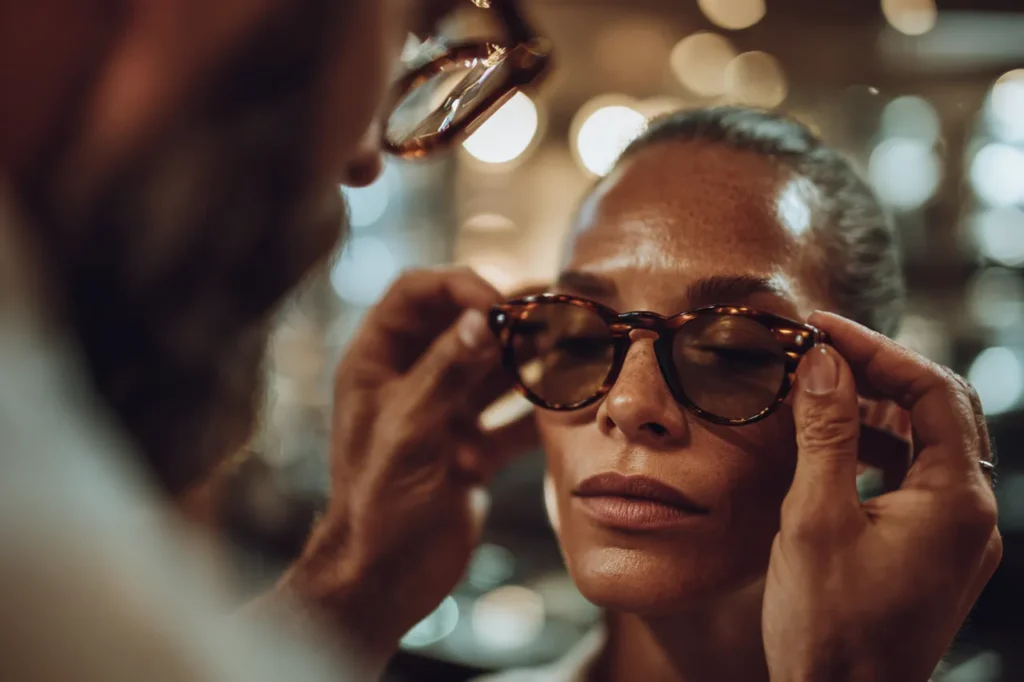
A reliable optometrist or optician does more than just show you frames; they evaluate your prescription, measure your pupillary distance with absolute precision, and ensure the retro frame sits correctly on the bridge of your nose so your vision remains crystal clear.
Finding the Right Glasses Vintage Style in Miami
Miami’s vibrant fashion scene makes retro eyewear incredibly popular, but buying glasses solely based on looks can lead to poor vision quality and eye strain. When you visit a local eye center, you benefit from a comprehensive approach; you can update your prescription through a comprehensive eye exam and receive professional guidance on which vintage-style frames mechanically support your lenses.
Frequently Asked Questions About Retro Eyewear
Can any prescription be put into glasses vintage style frames?
Most prescriptions can be accommodated, but highly complex or strong prescriptions may require specific frame shapes and high-index lenses to ensure the glasses are not too heavy or thick.
Are vintage-style frames good for progressive lenses?
Yes, but the frame must have sufficient vertical height; styles like 50s cat-eyes or 80s oversized frames usually work perfectly, while ultra-narrow 90s frames may not have enough space for the different focus zones.
Should I get an eye exam before buying new retro glasses?
Yes. Vision changes gradually, and putting an outdated prescription into a new frame can lead to eye fatigue and blurred vision; an annual eye exam ensures your new glasses provide optimal clarity.
Can I turn vintage-style frames into prescription sunglasses?
Absolutely. Almost all vintage-style frames can be fitted with custom, UV-blocking tinted lenses or polarized lenses, which are highly recommended for driving and outdoor activities in Florida.
Style Starts with Clear Vision
Embracing glasses vintage style is a great way to showcase your personality, but real quality comes from pairing that classic look with precise optical care. By combining your preferred retro aesthetic with a comprehensive eye exam and professional lens fitting, you ensure that your stylish new frames support your long-term eye health and daily comfort.