
The Science Made Simple: How Yellow Lenses Actually Work
To understand yellow sunglasses, you first have to understand blue light. Natural daylight contains a full spectrum of colors, but blue and violet light have relatively short wavelengths and scatter more easily than longer wavelengths. Because of this, it scatters very easily in the atmosphere, creating the visual “haze” you see on foggy, rainy, or heavily overcast days.
Yellow lenses work by aggressively filtering out this scattered blue light.
When you remove that blue haze, the remaining light creates extreme spatial contrast. Suddenly, the edges of objects appear sharper, and shapes stand out boldly against their backgrounds. You trade a bit of natural color accuracy (the sky might look a slightly muddy gray) for an immediate, powerful boost in depth perception and edge detection.
When Should You Wear Yellow Sunglasses in Florida?
Because they are clinically designed to enhance contrast rather than block blinding sunlight, yellow lenses are highly situational. Wearing them on a cloudless, blindingly bright Miami afternoon will feel harsh and uncomfortable. However, in low-color, “flat light” environments, their performance is unmatched.
Driving in Heavy Rain or Overcast Weather
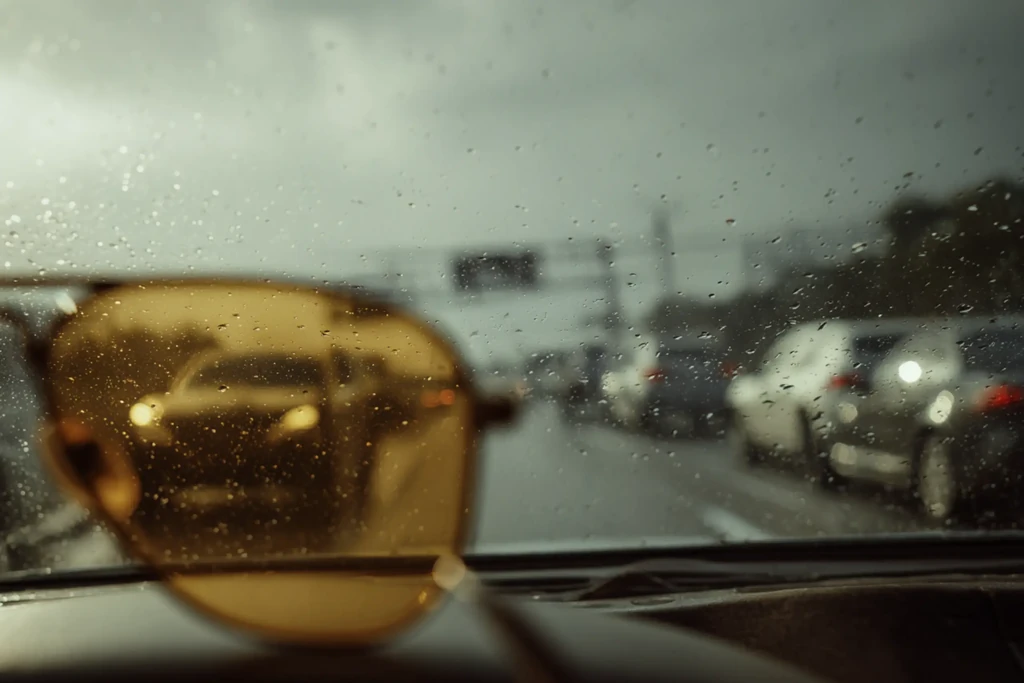
South Florida is famous for its sudden, intense afternoon thunderstorms. When the sky turns a wash of flat gray, putting on a yellow sunglasses polarized lens is a game-changer. The yellow tint filters out the gray-blue atmospheric scatter, helping you clearly see the outlines of other cars, lane markers, and road edges right through the heavy downpour.
Boating and Fishing in Low Light
Ask any avid angler: early morning fog or overcast days on the water make it incredibly difficult to read the surface of the ocean. A yellow polarized lens cuts through the surface glare while boosting the contrast of shadows, allowing you to spot fish or underwater structures even when the sun is hiding behind the clouds.
Style vs. Function: Choosing Your Yellow Sunglasses Frame
While the lens does the heavy optical lifting, the aesthetic appeal of yellow eyewear cannot be ignored. The vintage charm of a yellow sunglasses frame has made a massive comeback in the fashion world, blending retro vibes with modern streetwear.
Whether you prefer a classic translucent yellow acetate frame or a bold, chunky aviator design, pairing a yellow-tinted frame with a matching gradient lens creates an instantly iconic look.
CLINICAL SAFETY WARNING:
Never compromise on safety for the sake of fashion. A yellow lens naturally causes your pupils to dilate (widen) slightly. If those lenses do not have 100% UV protection, you are actually exposing your eyes to more harmful UV radiation than if you wore no glasses at all. Always purchase your sunglasses from a licensed optical center to guarantee true medical-grade UV shielding.

The Night Driving Myth: A Clinical Warning
One of the most persistent optical myths is that yellow lenses are ideal for night driving because they “reduce the glare” of oncoming headlights. As eye care professionals, we strongly advise against this.
At night, the biggest challenge to your vision is a lack of overall ambient light. Any tinted lens—even a light yellow one—reduces the total amount of light reaching your eyes. Wearing yellow lenses at night essentially makes your surroundings darker, making it incredibly dangerous and harder to spot pedestrians, dark vehicles, or unlit road signs.
If you struggle with nighttime headlight glare, the true clinical solution is an Anti-Reflective (AR) coating applied to clear prescription lenses—not a colored tint.
Frequently Asked Questions About Yellow Lenses
Do yellow sunglasses block blue light from computers?
Yes, the yellow tint naturally blocks blue light. However, wearing outdoor yellow sunglasses indoors for computer work is overkill and will darken your vision unnecessarily. Clinically designed computer glasses feature clear lenses with specialized, nearly invisible blue-light-blocking coatings that are much better suited for screen time.
Are all yellow sunglasses polarized?
No. “Yellow” is just the color tint, while “polarized” is a specific chemical filter built into the lens that blocks horizontal glare bouncing off water or wet roads. If you want them for boating or driving in the rain, you must specifically request a yellow polarized lens.
Can yellow lenses give me a headache?
If worn in the wrong conditions—like a severely bright, sunny day at the beach—yellow lenses can cause visual fatigue and mild discomfort. This happens because they alter natural color relationships and force your eyes to process high contrast when they don’t actually need it.
Find the Perfect Tint for Your Lifestyle at Elio´s Optical
Understanding the true purpose behind different lens tints ensures you get the absolute most out of your eyewear. Whether you need a high-contrast yellow lens to navigate Florida’s unpredictable weather or a standard dark polarized lens for Miami’s blinding afternoons, the experts at Elio´s Optical are here to guide you. Schedule a comprehensive eye exam or visit Elio’s Optical in Miami, Doral, or Deerfield Beach.Yellow sunglasses have always sparked curiosity. Some people swear by them for seeing clearly on gloomy days, while others strictly wear them as a bold fashion statement.
But what exactly happens to your vision when you put on a pair of yellow lenses?
Unlike standard dark grey or brown lenses that simply block bright sunlight to make things darker, yellow lenses play a fascinating trick on your brain.
By understanding the science behind the tint, you can figure out exactly when these lenses will give you a massive visual advantage in South Florida—and when you should leave them in their case.
The Science Made Simple: How Yellow Lenses Actually Work
To understand yellow sunglasses, you first have to understand blue light. Natural daylight contains a full spectrum of colors, but blue and violet light have relatively short wavelengths and scatter more easily than longer wavelengths. Because of this, it scatters very easily in the atmosphere, creating the visual “haze” you see on foggy, rainy, or heavily overcast days.
Yellow lenses work by aggressively filtering out this scattered blue light.
When you remove that blue haze, the remaining light creates extreme spatial contrast. Suddenly, the edges of objects appear sharper, and shapes stand out boldly against their backgrounds. You trade a bit of natural color accuracy (the sky might look a slightly muddy gray) for an immediate, powerful boost in depth perception and edge detection.
When Should You Wear Yellow Sunglasses in Florida?
Because they are clinically designed to enhance contrast rather than block blinding sunlight, yellow lenses are highly situational. Wearing them on a cloudless, blindingly bright Miami afternoon will feel harsh and uncomfortable. However, in low-color, “flat light” environments, their performance is unmatched.
Driving in Heavy Rain or Overcast Weather
South Florida is famous for its sudden, intense afternoon thunderstorms. When the sky turns a wash of flat gray, putting on a yellow sunglasses polarized lens is a game-changer. The yellow tint filters out the gray-blue atmospheric scatter, helping you clearly see the outlines of other cars, lane markers, and road edges right through the heavy downpour.
Boating and Fishing in Low Light
Ask any avid angler: early morning fog or overcast days on the water make it incredibly difficult to read the surface of the ocean. A yellow polarized lens cuts through the surface glare while boosting the contrast of shadows, allowing you to spot fish or underwater structures even when the sun is hiding behind the clouds.
Style vs. Function: Choosing Your Yellow Sunglasses Frame
While the lens does the heavy optical lifting, the aesthetic appeal of yellow eyewear cannot be ignored. The vintage charm of a yellow sunglasses frame has made a massive comeback in the fashion world, blending retro vibes with modern streetwear.
Whether you prefer a classic translucent yellow acetate frame or a bold, chunky aviator design, pairing a yellow-tinted frame with a matching gradient lens creates an instantly iconic look.
CLINICAL SAFETY WARNING:
Never compromise on safety for the sake of fashion. A yellow lens naturally causes your pupils to dilate (widen) slightly. If those lenses do not have 100% UV protection, you are actually exposing your eyes to more harmful UV radiation than if you wore no glasses at all. Always purchase your sunglasses from a licensed optical center to guarantee true medical-grade UV shielding.

The Night Driving Myth: A Clinical Warning
One of the most persistent optical myths is that yellow lenses are ideal for night driving because they “reduce the glare” of oncoming headlights. As eye care professionals, we strongly advise against this.
At night, the biggest challenge to your vision is a lack of overall ambient light. Any tinted lens—even a light yellow one—reduces the total amount of light reaching your eyes. Wearing yellow lenses at night essentially makes your surroundings darker, making it incredibly dangerous and harder to spot pedestrians, dark vehicles, or unlit road signs.
If you struggle with nighttime headlight glare, the true clinical solution is an Anti-Reflective (AR) coating applied to clear prescription lenses—not a colored tint.
Frequently Asked Questions About Yellow Lenses
Do yellow sunglasses block blue light from computers?
Yes, the yellow tint naturally blocks blue light. However, wearing outdoor yellow sunglasses indoors for computer work is overkill and will darken your vision unnecessarily. Clinically designed computer glasses feature clear lenses with specialized, nearly invisible blue-light-blocking coatings that are much better suited for screen time.
Are all yellow sunglasses polarized?
No. “Yellow” is just the color tint, while “polarized” is a specific chemical filter built into the lens that blocks horizontal glare bouncing off water or wet roads. If you want them for boating or driving in the rain, you must specifically request a yellow polarized lens.
Can yellow lenses give me a headache?
If worn in the wrong conditions—like a severely bright, sunny day at the beach—yellow lenses can cause visual fatigue and mild discomfort. This happens because they alter natural color relationships and force your eyes to process high contrast when they don’t actually need it.
Find the Perfect Tint for Your Lifestyle at Elio´s Optical
Understanding the true purpose behind different lens tints ensures you get the absolute most out of your eyewear. Whether you need a high-contrast yellow lens to navigate Florida’s unpredictable weather or a standard dark polarized lens for Miami’s blinding afternoons, the experts at Elio´s Optical are here to guide you. Schedule a comprehensive eye exam or visit Elio’s Optical in Miami, Doral, or Deerfield Beach.