
Receiving a keratoconus diagnosis often triggers an immediate, practical question: “Can I just wear glasses to fix my vision?”
The short answer is yes, but usually only in the early stages.
Unlike common nearsightedness or farsightedness, keratoconus physically changes the shape of your cornea over time. Because of this, standard eyeglasses eventually hit a limit on how much clarity they can provide. For patients navigating sunny days and bright night drives in Miami, understanding how keratoconus alters your eye is essential for protecting your vision and quality of life.
How Keratoconus Changes Your Vision
To understand why eyeglasses have limitations, it helps to look at how light enters the eye. A healthy cornea acts like a perfectly smooth, dome-shaped camera lens, bending light cleanly onto a single focal point on the retina.
With keratoconus, the corneal tissue gradually thins and bulges outward into an irregular, cone-like shape. Instead of focusing light precisely, the distorted cornea scatters it in multiple directions. This light scattering triggers the classic symptoms of keratoconus:
- Blurry or distorted vision at all distances
- Ghosting (seeing a faint double image or shadow around objects)
- Severe glare and starbursts around bright lights, making night driving particularly difficult
When Do Glasses for Keratoconus Actually Work?
In the mild or early stages of keratoconus, eyeglasses are highly effective and usually serve as your first line of defense. At this point, the primary visual issues are mild nearsightedness and regular astigmatism, which standard lenses can easily offset.
However, an eyeglass prescription for keratoconus requires absolute precision—even a tiny shift in the astigmatism axis can lead to blurry vision or eye strain. To get the clearest, most comfortable vision in the early stages, investing in specific lens technologies makes a noticeable difference:
- Anti-Reflective (AR) Coatings: Crucial for cutting down glare, halos, and starbursts, especially during night driving or under bright fluorescent lighting.
- High-Index Lenses: As your prescription increases, high-index materials keep your lenses thin, lightweight, and cosmetically appealing without adding heavy bulk.
- Aspheric Lens Designs: These lenses feature a flatter curve, which minimizes peripheral distortion and delivers a wider, more natural field of clear view.
Why Glasses Eventually Stop Working
As keratoconus progresses, many patients find themselves updating their glasses prescription every few months, only to realize their vision remains frustratingly fuzzy.
This happens because of a simple optical limitation: a flat glass lens sitting half an inch away from your eye cannot correct a bumpy, irregular corneal surface.
While an eyeglass lens bends light uniformly, it cannot compensate for the tiny optical distortions caused by a pronounced cone-shaped cornea. If you start experiencing constant monocular diplopia (shadowy outlines around letters even with your glasses on) or severe eye fatigue by the end of the day, your condition has likely outpaced what glasses can correct.
Beyond Glasses: Transitioning to Specialty Contact Lenses
When glasses no longer deliver sharp vision, a specialized eye center will guide you toward advanced contact lenses designed specifically for irregular corneas. These are not off-the-shelf soft contacts; they are custom medical devices engineered to create a new optical surface for your eye.
Rigid Gas Permeable (RGP) and Scleral Lenses
Scleral lenses are widely considered the gold standard for moderate-to-severe keratoconus. Unlike traditional contacts, scleral lenses do not touch the sensitive, irregular center of your cornea. Instead, they vault completely over the cone and rest gently on the white part of the eye (the sclera).
Why You Still Need a Backup Pair of Glasses
Even after transitioning to scleral or hybrid lenses, keeping an updated pair of keratoconus glasses is non-negotiable.
Your eyes need routine breaks from contact lenses, particularly early in the morning, late at night, or on days when your eyes feel dry or irritated.
In addition, your optometrist may prescribe glasses to wear over your specialty contacts. This “over-refraction” technique fine-tunes your vision for specific tasks, such as providing a slight magnification boost for reading while your scleral lenses correct the primary corneal distortion.
Managing Keratoconus in Miami: Eye Center vs. Optical Store
Because keratoconus is a progressive medical condition, walking into a commercial optical store for a quick glasses prescription is rarely sufficient. You need the expertise of a licensed optometrist or cornea specialist at a dedicated medical eye center.
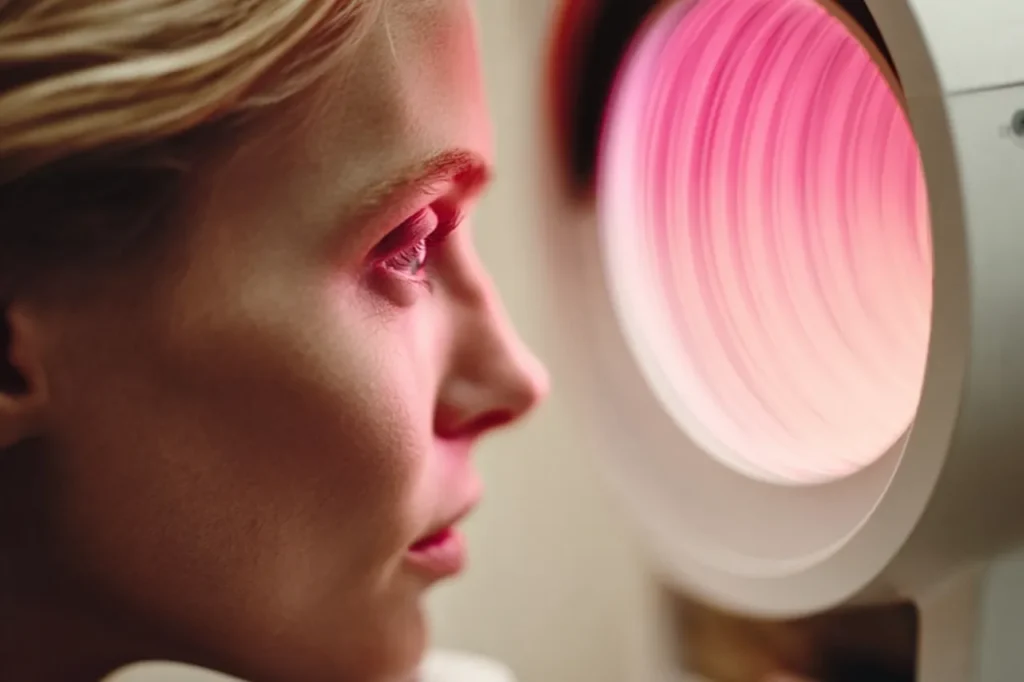
A specialized care provider uses advanced corneal topography equipment to map the exact 3D surface of your eye, monitor progression accurately, and determine whether high-precision glasses or custom specialty lenses will yield the best visual outcome.
Frequently Asked Questions
Can reading glasses from the pharmacy help my keratoconus?
No. Over-the-counter reading glasses offer simple magnification for age-related vision changes (presbyopia). They cannot correct the complex, irregular astigmatism caused by keratoconus and will only cause eye strain and headaches.
Is it normal for my glasses prescription to change frequently?
Yes. Rapidly changing prescriptions are a hallmark sign of progressive keratoconus. If a new pair of glasses stops providing clear vision shortly after you pick them up, schedule a specialized clinical evaluation to assess your cornea.
Can glasses cure or stop the progression of keratoconus?
No. Glasses only alter how light enters the eye to temporarily improve clarity. They do not alter or support the corneal tissue itself and cannot stop the cornea from thinning or bulging over time.