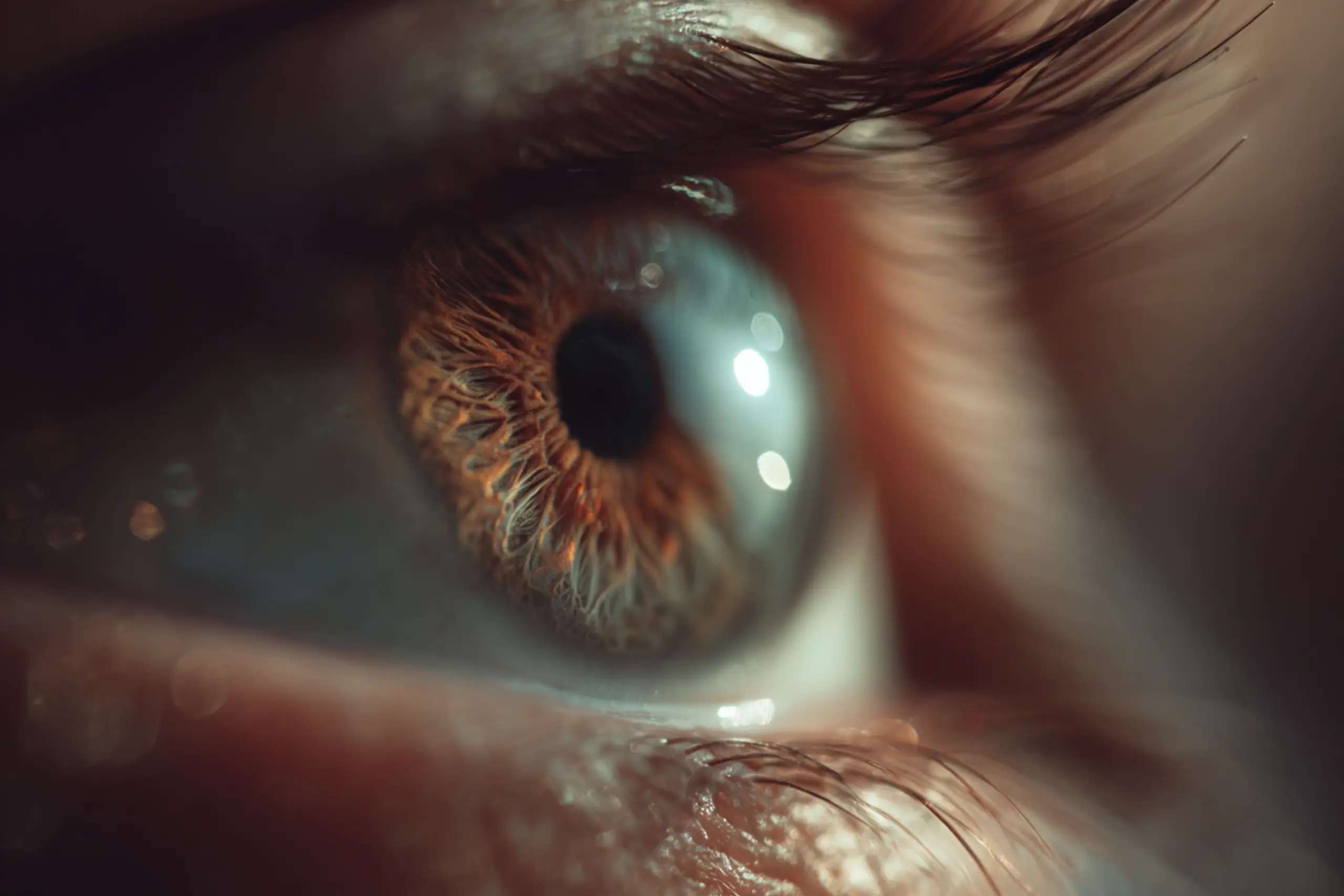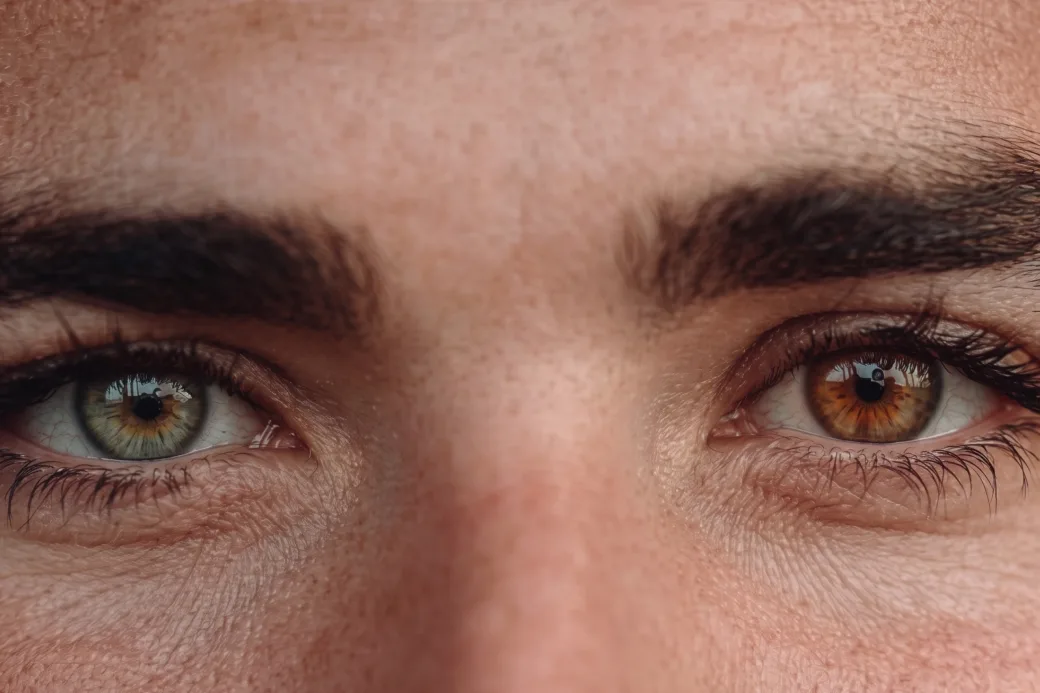

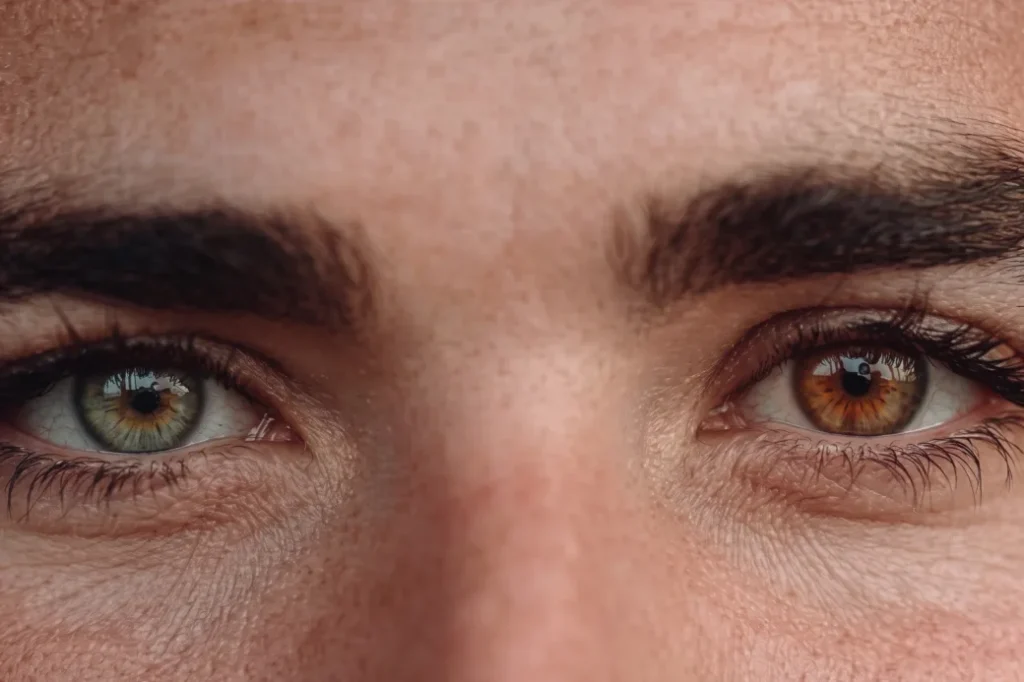
Observar un ojo con heterocromía es una experiencia innegablemente cautivadora. Aunque normalmente esperamos un par de ojos iguales, este llamativo rasgo hace que una persona tenga dos iris de colores claramente distintos o varios colores girando dentro de un solo ojo.
En la mayoría de los casos, el rasgo de heterocromía humana no es más que una variación genética hermosa y completamente inofensiva. Sin embargo, no todos los cambios en el color de ojos están presentes desde el nacimiento. Aunque tener un color de ojos único es algo que celebrar, un cambio repentino en la pigmentación del iris más adelante en la vida puede ser una seria señal de alerta médica.
Entender la diferencia entre una peculiaridad genética benigna y una afección adquirida es la mejor manera de asegurarte de que tus ojos se mantengan tan sanos como únicos.
¿Qué causa el color de ojos con heterocromía?
El color de ojos con heterocromía se reduce a un único factor: la melanina. Es exactamente el mismo pigmento natural que determina el tono de tu piel y cabello.
- Alta concentración de melanina: Los ojos absorben la luz y se ven de un marrón intenso.
- Baja concentración de melanina: Los ojos reflejan y dispersan la luz, y se ven azules, verdes o grises.
Cuando una persona desarrolla heterocromía, simplemente significa que la melanina se distribuyó de manera desigual en el iris durante el desarrollo fetal. Un ojo termina con un nivel de pigmentación completamente diferente al resto. Aunque esta distribución desigual es bastante rara en los humanos, es una variación biológica perfectamente natural.
Comprender los 3 tipos principales de heterocromía
La heterocromía no se presenta de la misma manera en todas las personas. Los profesionales del cuidado de la visión clasifican la afección en tres tipos de heterocromía distintos según cómo aparecen los patrones de color en el iris:
1. Heterocromía completa
Esta es la forma más llamativa y fácil de reconocer al instante. En la heterocromía completa, un iris entero es de un color completamente diferente al otro; por ejemplo, un ojo de un azul penetrante junto con un ojo de un marrón profundo.
2. Heterocromía parcial (sectorial)
En lugar de que todo el ojo cambie de color, la heterocromía parcial ocurre cuando una sección distinta o una “rebanada” del iris muestra un tono diferente. Podrías ver un ojo predominantemente verde con una cuña marcada de ámbar o marrón que lo atraviesa.
3. Heterocromía central
A menudo se confunde con los ojos avellana; la heterocromía central presenta un anillo interior de color distinto alrededor de la pupila que contrasta marcadamente con el anillo exterior del iris.
Heterocromía central vs. ojos avellana: Los ojos avellana mezclan tonos verdes, dorados y marrones de forma uniforme en todo el iris. La heterocromía central presenta un borde nítido y sin mezcla, como un anillo dorado dentro de un ojo azul claro.

¿Existe algo llamado enfermedad de heterocromía? Congénita vs. adquirida
Una preocupación frecuente entre los pacientes es si su color de ojos indica una enfermedad de heterocromía subyacente. La respuesta depende casi por completo de cuándo apareció por primera vez la diferencia de color.
Heterocromía congénita (benigna)
Si naciste con ojos de diferentes colores, tienes heterocromía congénita. Casi siempre es completamente inofensiva y no tiene ningún impacto negativo en tu agudeza visual, enfoque o salud ocular. Aunque en ocasiones puede estar relacionada con afecciones genéticas raras (como el síndrome de Waardenburg), la gran mayoría de los casos no requiere ningún tratamiento.
Heterocromía adquirida (requiere atención inmediata)
Si tus ojos siempre han sido del mismo color y uno de repente comienza a cambiar en la edad adulta, esto es heterocromía adquirida, y requiere una evaluación inmediata por parte de un optometrista de confianza.
Los cambios de color adquiridos suelen ser desencadenados por un evento médico subyacente, que incluye:
- Glaucoma y gotas oftálmicas con receta: Ciertas enfermedades oculares o las gotas medicadas que se usan para controlar la presión interna del ojo pueden aumentar la producción de melanina, haciendo que un ojo más claro se vuelva notablemente más oscuro con el tiempo.
- Inflamación interna del ojo o tumores: Afecciones no tratadas como la uveítis, el daño celular o los crecimientos benignos dentro del ojo pueden alterar la pigmentación del iris.
Cuidado de un ojo con heterocromía en Miami
Si tienes un ojo con heterocromía, tu ojo más claro contiene naturalmente menos melanina que tu ojo más oscuro. Como la melanina actúa como protección incorporada contra la radiación solar, tu ojo más claro es inherentemente más sensible a la luz solar intensa y al resplandor.
Vivir en un entorno de mucho sol como Miami significa que la protección UV no es solo una elección de estilo, sino atención médica preventiva.
Usar gafas de sol polarizadas con receta de alta calidad ayuda a proteger el iris menos pigmentado del daño solar acumulativo, las cataratas prematuras y la degeneración macular. En Elio’s Miami, podemos adaptarte lentes que bloquean los rayos UV especiales que mantienen ambos ojos protegidos sin ocultar tu aspecto único.
Los ojos únicos merecen cuidado experto
Tener el rasgo de heterocromía humana hace que tu apariencia sea inolvidable. Aunque la mayoría de los casos son solo una hermosa variación genética, asegurarse de que un cambio sutil de color no esté ocultando un problema de salud es vital para la protección de la visión a largo plazo.
Ya sea que necesites una evaluación inicial para un niño nacido con ojos de varios colores o protección UV personalizada para el intenso sol de Miami, programar un examen ocular completo asegura que tus ojos se mantengan tan sanos como únicos.
Preguntas frecuentes
¿Las personas con heterocromía ven de manera diferente?
No. Si el rasgo es congénito, un ojo con heterocromía funciona igual que cualquier otro ojo. No causa visión borrosa, daltonismo ni distorsiones visuales.
¿Puede un examen ocular habitual detectar una enfermedad de heterocromía subyacente?
Sí. Un examen ocular completo utiliza imágenes avanzadas con lámpara de hendidura para observar profundamente dentro del iris. Esto permite que tu optometrista confirme si tu patrón de color es un rasgo genético inofensivo o un síntoma de traumatismo, glaucoma o inflamación interna.
¿Pueden los ojos avellana convertirse en heterocromía central?
No. Los ojos avellana y la heterocromía central son estructuralmente diferentes. Los ojos avellana tienen una distribución suave y mezclada de pigmento marrón y verde, mientras que la heterocromía central presenta un anillo de color distinto y localizado alrededor de la pupila presente desde el desarrollo temprano.
¿Debería preocuparme si mi color de ojos cambia en la edad adulta?
Sí. Cualquier cambio notable en el color de ojos de un adulto debe ser evaluado por un médico oftalmólogo con licencia de inmediato para descartar una enfermedad ocular interna, efectos secundarios de medicamentos o una lesión estructural.