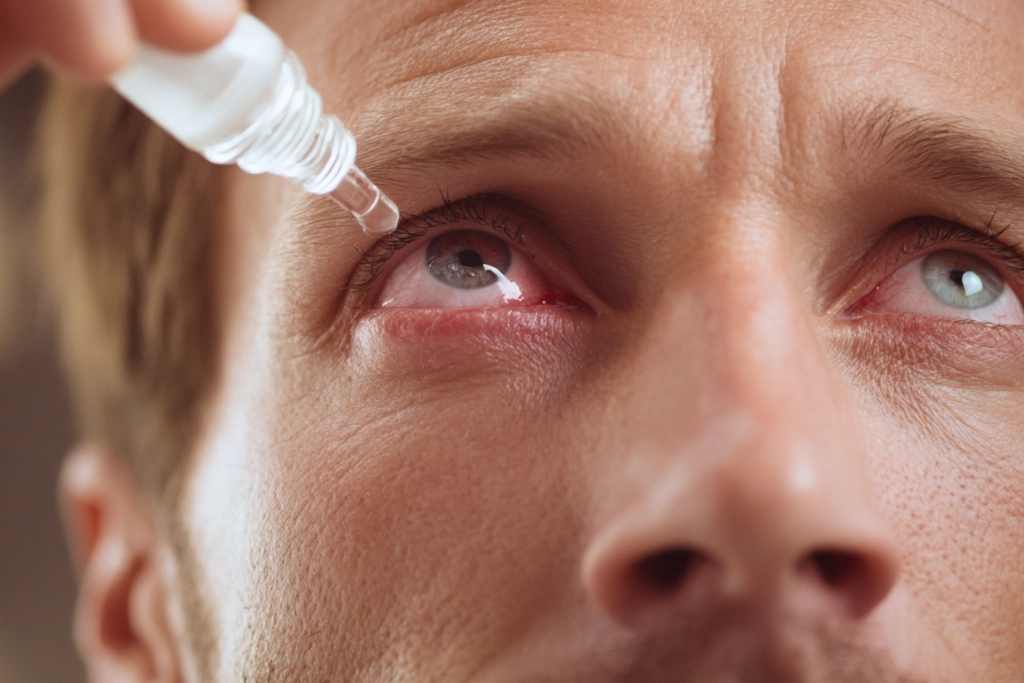


Despertarse con los ojos rojos, hinchados o llenos de costras es incómodo y a menudo alarmante. Cuando los pacientes buscan entender qué es el ojo rosado, generalmente están lidiando con una irritación intensa que les dificulta concentrarse en el trabajo, enviar a los niños a la escuela o realizar sus actividades diarias.
Conocida médicamente como conjuntivitis, esta afección común es tan disruptiva como visible. Sin embargo, no todos los casos de ojo rosado son iguales.
En el sur de Florida, donde los altos recuentos de polen estacional se combinan con el aire acondicionado constante en interiores, identificar las razones exactas del ojo rosado detrás de tus síntomas es la única forma de obtener un alivio rápido y duradero mientras mantienes seguras a las personas que te rodean.
¿Qué es exactamente el ojo rosado o la conjuntivitis?
El ojo rosado es la hinchazón o inflamación de la conjuntiva, el tejido delicado y transparente que recubre el interior de tu párpado y cubre la parte blanca de tu globo ocular (la esclerótica).
En condiciones normales, los pequeños vasos sanguíneos dentro de la conjuntiva son casi invisibles. Pero cuando ataca la irritación o una infección, estos vasos sanguíneos se expanden y se llenan de sangre adicional, dándole a la parte blanca de tu ojo su característico aspecto rosado o inyectado en sangre.
Punto clave: Aunque la conjuntivitis es muy incómoda, rara vez daña tu visión a largo plazo cuando se evalúa a tiempo. Sin embargo, adivinar tu diagnóstico en casa o usar gotas viejas de venta libre puede provocar complicaciones, especialmente para quienes usan lentes de contacto.
Principales razones del ojo rosado y síntomas de la conjuntivitis
Debido a que diferentes desencadenantes subyacentes requieren remedios completamente diferentes, reconocer síntomas específicos de conjuntivitis ayuda a guiar el cuidado adecuado. Los profesionales del cuidado ocular clasifican la afección en tres tipos principales:
1. Conjuntivitis viral
Este es el culpable más frecuente del ojo rosado, y a menudo proviene de los mismos virus respiratorios que causan el resfriado común.
- Signos clave: Secreción acuosa, sensibilidad a la luz y enrojecimiento intenso que comienza en un ojo y se extiende rápidamente al otro.
- Contagio: Extremadamente contagiosa.
2. Conjuntivitis bacteriana
Causada por una infección bacteriana, este tipo requiere una intervención médica específica para resolverse limpiamente.
- Signos clave: Una secreción espesa, amarilla o verdosa que forma una “costra” pegajosa sobre tus párpados durante la noche, literalmente pegando tus pestañas.
- Contagio: Altamente contagiosa por contacto directo.
3. Conjuntivitis alérgica
Común en todo el sur de Florida debido a las floraciones durante todo el año, el moho y el polvo interior que circula por los sistemas de aire acondicionado.
- Signos clave: Picazón intensa e insoportable en ambos ojos simultáneamente, a menudo acompañada de estornudos, secreción nasal y lagrimeo.
- Contagio: Completamente no contagiosa.

¿Cuánto dura el período contagioso de la conjuntivitis?
Entender el período contagioso de la conjuntivitis es esencial para padres, maestros y profesionales que trabajan y tratan de evitar propagar la infección en hogares u oficinas.
- Ojo rosado viral: Sigues siendo contagioso mientras haya lagrimeo activo, enrojecimiento y secreción líquida, lo que puede durar desde varios días hasta dos semanas completas.
- Ojo rosado bacteriano: Por lo general, se considera que ya no eres contagioso una vez que has estado usando gotas oftálmicas antibióticas con receta durante al menos 24 horas y la secreción activa ha desaparecido.
- Ojo rosado alérgico: No es contagioso en ningún momento.
Para evitar que las cepas virales y bacterianas se propaguen, practica una higiene estricta: lávate las manos con frecuencia, cambia las fundas de almohada a diario y evita tocarte o frotarte los ojos.
Tratamientos efectivos para la conjuntivitis
Encontrar el tratamiento correcto para el ojo rosado depende completamente de qué desencadenó la inflamación en primer lugar:
- Tratamientos bacterianos: Tu optometrista recetará gotas oftálmicas antibióticas o pomadas específicas. Los síntomas suelen mejorar drásticamente dentro de las 24 a 48 horas posteriores al inicio de los tratamientos con receta para la conjuntivitis.
- Tratamientos virales: Los antibióticos no curarán un virus. En cambio, el manejo se centra en la comodidad: usar compresas frías, lágrimas artificiales y dejar que tu sistema inmunitario elimine el virus de forma segura.
- Tratamientos alérgicos: Se requieren gotas oftálmicas antihistamínicas de venta libre o con receta para calmar la respuesta alérgica y aliviar instantáneamente la picazón.
ADVERTENCIA CRÍTICA PARA USUARIOS DE LENTES DE CONTACTO:
Si usas lentes de contacto, quítatelos de inmediato ante el primer signo de ojos rojos y cambia a gafas. Usar lentes de contacto sobre una córnea infectada o inflamada puede atrapar patógenos, lo que provoca úlceras corneales dolorosas y cicatrices permanentes en la visión.
Por qué necesitas un diagnóstico profesional en el sur de Florida
Debido a que los síntomas de la conjuntivitis viral, bacteriana y alérgica se superponen tanto, autodiagnosticarse en casa conlleva riesgos reales. Las afecciones oculares graves, como rasguños en la córnea, enfermedad grave de ojo seco, glaucoma agudo o infecciones profundas de la córnea, a menudo imitan al ojo rosado en sus primeras etapas, pero requieren atención urgente muy diferente.
Visitar Elio’s para un examen ocular completo te asegura recibir un diagnóstico preciso, las gotas con receta correctas y una guía clara sobre cuándo es seguro usar lentes de contacto.
Si estás experimentando enrojecimiento, irritación o secreción en los ojos, nuestros equipos clínicos están listos para ayudar en todo el sur de Florida:
- ¿Estás en el norte? Reserva una evaluación en nuestro moderno centro de cuidado ocular en Deerfield Beach.
- ¿Estás en el centro? Visita a nuestros especialistas en nuestra oficina de Doral o programa un examen completo con nuestros expertos optometristas de Miami para obtener un alivio inmediato y personalizado.
No esperes a que pase la incomodidad
Cuando se trata de enrojecimiento o irritación repentinos en los ojos, un enfoque de “esperar y ver” puede provocar dolor innecesario y propagación de la infección. Al identificar las razones exactas del ojo rosado mediante un examen ocular profesional, obtienes la atención precisa que necesitas para restaurar tu visión.
Preguntas frecuentes
¿Puedo ir al trabajo o a la escuela con ojo rosado?
Si tu ojo rosado es viral o bacteriano, debes quedarte en casa hasta que la secreción activa se detenga o hayas completado al menos 24 horas de gotas antibióticas. Si tus síntomas son causados puramente por alergias, no eres contagioso y puedes asistir al trabajo o a la escuela normalmente.
¿El ojo rosado desaparecerá eventualmente por sí solo?
Los casos virales y alérgicos a menudo se resuelven una vez que termina el ciclo viral o se elimina el alérgeno. Sin embargo, la conjuntivitis bacteriana requiere gotas antibióticas con receta para eliminarse de forma segura y prevenir complicaciones secundarias.
¿Debo tirar mi maquillaje y lentes de contacto después de tener conjuntivitis?
Sí. Para evitar reinfectarte, tira cualquier maquillaje de ojos (rímel, delineador líquido) y lentes de contacto desechables usados justo antes o durante la infección. Los lentes duros y los estuches de almacenamiento deben esterilizarse a fondo.